
Golf's Independent Media Explosion
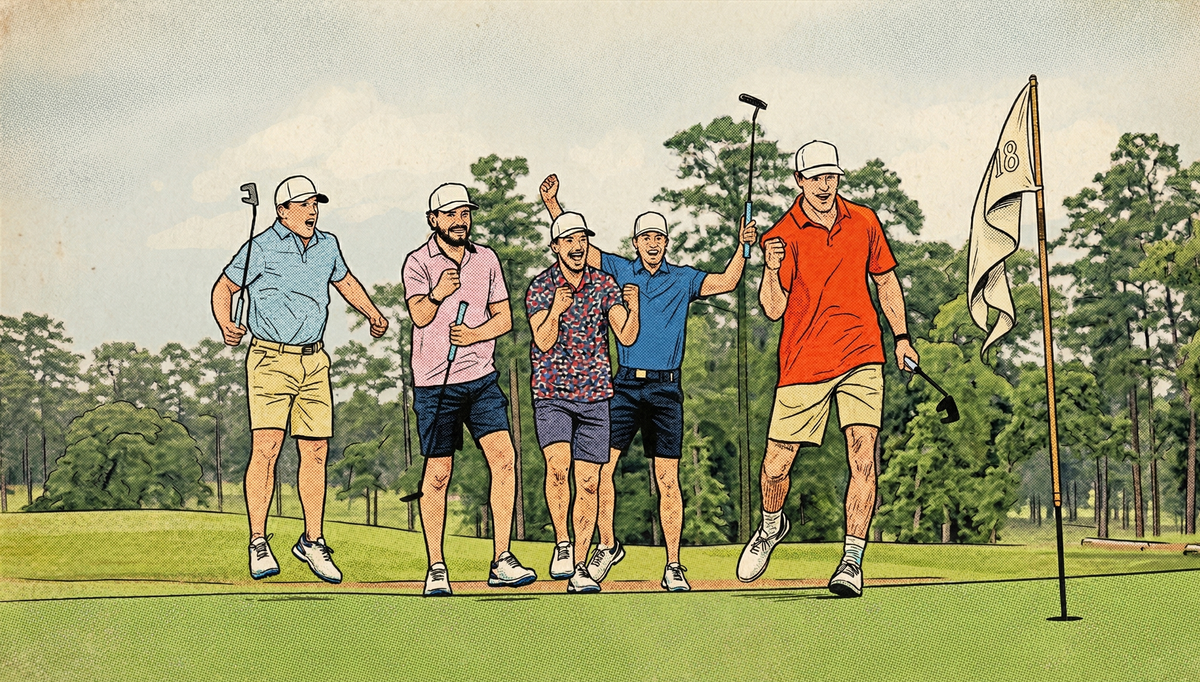
YouTube is now the dominant video platform in the world — and golf creators have built audiences on it that rival the sport's institutional channels. Good Good has a single video with 8.7 million views; the U.S. Open hasn't drawn that on a Sunday since 2012. Independent golf media is no longer a curiosity. It is a structural layer of the economy — and the equipment companies are reallocating dollars accordingly.
Golf is a $140B+ industry. Every week, Perfect Putt breaks down what's actually driving it. Welcome to the new members who've joined since our last send — you're now part of a growing community of 11,000+ golfers who follow the business of the game.
Read Time: 5 minutes
The Audience Scale
The largest independent golf YouTube channels now command subscriber bases and viewership numbers that compete directly with professional tour channels.
For context, the institutional channels: PGA Tour at approximately 1.38 million subscribers. DP World Tour at 456,000. LIV Golf at 347,000. LPGA Tour at 205,000.
Independent creators operate at comparable or greater scale — and their engagement metrics tell a sharper story than subscriber counts alone. Good Good, which launched its channel in 2020, has over 106 videos with at least one million views — more than 20% of its total output. Its most-watched video has accumulated 8.7 million views. For perspective, the U.S. Open has not drawn 8.7 million viewers for a Sunday broadcast since 2012.
That video was three hours long. Length did not suppress viewership — it amplified it. The audience chose to spend three hours with a creator-produced golf video at a rate that exceeds what the sport's most prestigious championship draws on network television.
Every major independent golf channel has posted double-digit subscriber growth over the past year. Three have grown over 50%. The institutional tour channels are growing as well — the LPGA at approximately 51%, LIV Golf at 30%, DP World Tour at 21%, PGA Tour at 20% — but the independent channels are setting the pace.
The Consumption Data
A survey of over 1,000 golf-engaged respondents on X provides a directional picture of consumption habits. An estimated 64% reported watching golf-related content on YouTube. Among those who watch, approximately 52% consume zero to four hours per month, 24% watch five to nine hours, 12% watch ten to fourteen hours, and 12% watch more than fourteen hours monthly.
The top of that distribution is significant. Roughly a quarter of YouTube golf viewers are watching five-plus hours per month — a level of engagement that exceeds what most consumers spend watching professional tournament broadcasts. These are not casual viewers sampling a highlight clip. They are committed audience members consuming long-form content on a recurring basis.
Aggregated across the major independent channels and institutional tour accounts, golfers have consumed billions of hours of golf-related content on YouTube. The platform has become a primary consumption channel for the sport — not a supplement to broadcast, but in many cases a replacement for it among younger demographics.
The Sponsorship Shift
Equipment companies are deploying marketing capital into independent golf media at a scale that reflects the audience reality.
Good Good holds a brand partnership with Callaway. Bob Does Sports is also partnered with Callaway. Fore Play is partnered with TaylorMade. No Laying Up is partnered with Titleist. Golfer's Journal — a premium quarterly print publication that has built a loyal readership by moving against the digital-only trend — is also partnered with Titleist.
The pattern is clear: every major equipment OEM has shifted sponsorship dollars into independent media channels. The spend is not necessarily incremental — it is more likely a reallocation from traditional media budgets toward channels that deliver higher engagement, stronger audience trust, and measurable attribution.
The value proposition for equipment companies is differentiated from traditional advertising. A creator who uses Callaway equipment in every video, discusses product performance organically, and builds audience trust over hundreds of hours of content creates a fundamentally different brand relationship than a 30-second commercial during a tournament broadcast. The trust premium in creator environments is becoming quantifiable — ad rates in verified creator partnerships can command an estimated two to three times the rate of algorithm-driven content placement.
The Creator Advantage
Independent golf media creators share a structural advantage over institutional channels: every piece of content is a permanent asset.
A tournament broadcast depreciates the moment it ends. A creator video that accumulates two million lifetime views continues generating ad revenue, sponsorship attribution, and audience engagement indefinitely. Good Good can produce a single tournament-format video and generate viewership that exceeds what many PGA Tour events draw on a Sunday afternoon — and that content continues working for years after upload.
The compounding nature of this content library is the economic engine that distinguishes creator media from traditional broadcast. Institutional channels produce highlights with a shelf life measured in days. Creator channels produce narrative content with a shelf life measured in years.
The Broader Landscape
YouTube is not the only platform where independent golf media is scaling. Newsletter platforms have enabled written content to reach audiences at a fraction of the cost and infrastructure required by traditional media. The barriers to entry — for video, written content, audio, and social media — have never been lower. The platforms are mature, the distribution tools are sophisticated, and the audience appetite for golf content is demonstrably strong.
The result is a media ecosystem that now operates in parallel to — and in some cases ahead of — the institutional media infrastructure that has historically controlled golf's narrative and advertising inventory.
The Takeaway
Independent golf media is no longer a niche category. It is a primary content consumption channel for millions of golfers, a meaningful distribution platform for equipment companies, and a structural layer of golf's commercial ecosystem that did not exist at scale five years ago.
The creators who have built these audiences did so without traditional media backgrounds, institutional support, or broadcast infrastructure. They built trust through consistency, authenticity, and volume — and the audiences they have assembled are now large enough to command sponsorship commitments from every major OEM in the sport.
The equipment companies are not spending more on marketing. They are spending differently — shifting dollars from channels with declining viewership toward channels with growing, engaged, and demonstrably loyal audiences. That reallocation will accelerate as the viewership data continues to favor creator distribution over traditional broadcast for the demographics that matter most to golf's commercial future.
The best way to support Perfect Putt is to subscribe and share with a friend.