
Should Callaway Sell Its Equipment Business?
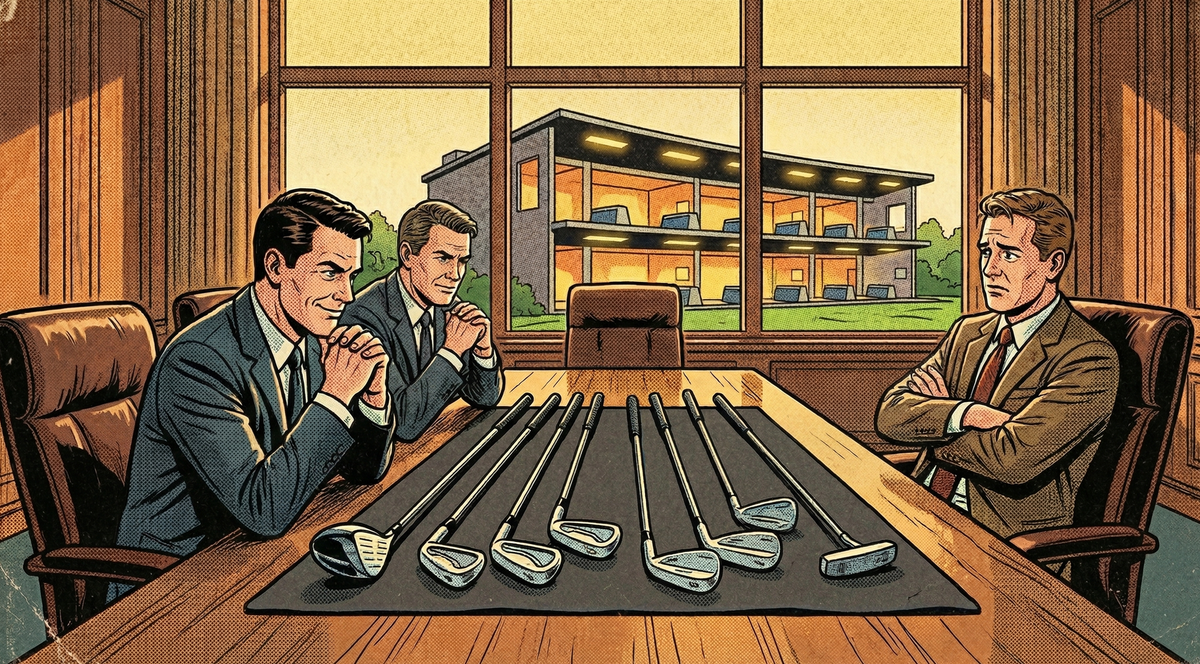
A report out of South Korea valued Callaway's equipment business at $3 billion — and the company's three largest shareholders are reportedly evaluating their positions. Callaway says it is unaware of any sale discussions. The more important question: should the equipment business be separated from Topgolf? Three years into the merger, the thesis that justified combining them has not been validated.
Golf is a $140B+ industry. Every week, Perfect Putt breaks down what's actually driving it. Welcome to the new members who've joined since our last send — you're now part of a growing community of 11,000+ golfers who follow the business of the game.
Read Time: 6 minutes
The Shareholder Pressure
The stock tells the clearest story about market confidence.
Topgolf Callaway Brands traded at $27.44 on December 31, 2021. It currently trades at approximately $16.00 — a decline of over 40%. BlackRock increased its position from approximately 7% ownership to 12.7% over the past two years, accumulating shares as the price fell. Whether that reflects conviction in a turnaround or positioning for an activist campaign is an open question — but an 80% increase in ownership by the company's largest shareholder during a period of sustained stock price decline is notable.
The shareholder composition adds context to the Korean report. If the three largest holders — controlling a combined 34.2% of the company — are dissatisfied with performance and exploring options, a strategic separation or sale of the equipment business would be a logical path to unlocking value that the market is not currently pricing into the combined entity.
The South Korean Angle
The report originating from South Korea is not incidental. Korean capital is deeply embedded in the golf equipment sector.
Seoul-based Centroid Investment Partners acquired TaylorMade in 2021 for a reported $1.7 billion. South Korean company Fila Holdings Corporation owns 52% of Acushnet, parent of Titleist and FootJoy. If Callaway's equipment business were available at $3 billion, Korean investors would be among the most logical acquirers — they already own or control two of the three largest equipment companies in the world.
A Korean acquisition of Callaway's equipment business would consolidate the global golf OEM market under significant Korean ownership influence — an extraordinary structural shift for an industry historically dominated by American and Japanese capital.
The Capital Allocation Mismatch
The fundamental challenge of the Topgolf-Callaway combination is that the two businesses require categorically different capital allocation strategies.
Callaway's equipment business generated approximately $1.3 billion in revenue in 2023. Equipment operates on product development cycles, wholesale distribution, and moderate capital intensity. Cash flow is relatively predictable. Growth is driven by innovation, brand equity, and channel management.
Topgolf requires massive capital deployment to build new venues — historically $30 to $50 million per location at peak buildout. Growth is driven by real estate selection, construction execution, food and beverage operations, and sustained high-volume traffic. Same-venue sales have declined in the last two quarters. The businesses share a brand ecosystem but virtually nothing in terms of operating rhythm, capital requirements, or management expertise.
The case for separation can be made on capital allocation alone — before addressing whether the merger has produced the commercial synergies that justified it.
The Synergy Question
The original merger thesis was compelling: Topgolf serves an estimated 30 million unique visitors annually across its venues. Approximately half identify as non-golfers. Topgolf estimates that roughly 10% of on-course golfers credit the venue experience with introducing them to the game. If Callaway could capture the equipment spend of the golfers Topgolf was converting, the vertical integration would create a moat no competitor could replicate.
Three years later, the evidence that this conversion is producing material equipment revenue is thin.
Topgolf operates over 90 venues — the largest captive audience in golf. Yet there is no visible indication that Callaway is selling through meaningful volume of equipment or apparel at Topgolf locations. The fitting and retail infrastructure that companies like Club Champion and True Spec have built inside dedicated brick-and-mortar locations does not appear to have been replicated at scale inside Topgolf venues.
The likely constraint is channel conflict. An estimated 70% of golf equipment is sold through retail partners. If Callaway aggressively pursued direct-to-consumer distribution through Topgolf locations, it would risk destabilizing the retail relationships that generate the majority of its equipment revenue. The strategic upside of owned distribution may not be worth the channel disruption risk.
Callaway presented a full page of Topgolf synergies in its most recent investor deck. But the market is not pricing those synergies into the stock — which means either the synergies have not materialized in the financials, or the market does not believe they will.
The Distribution Opportunity That Remains Untested
The most valuable strategic asset in the Topgolf-Callaway combination is the distribution channel that Topgolf's venue network represents — and the open question is whether that channel has been adequately tested.
Ninety-plus venues. Thirty million annual visitors. A captive audience that is, by definition, engaged with golf at the moment they are inside the facility. The opportunity to integrate custom fitting, equipment trial, and purchase infrastructure into that environment is significant — if the channel conflict can be managed.
Has Callaway piloted dedicated fitting bays or retail environments inside select Topgolf venues? Has it tested whether the Topgolf guest profile converts to equipment purchaser at a rate that justifies the investment? If those experiments have been run and the results were negative, the case for separation strengthens considerably. If they have not been run — or have been run at insufficient scale — then Callaway is potentially walking away from the thesis before it has been fully tested.
The Takeaway
Topgolf Callaway Brands faces a strategic inflection. The stock has declined over 40% since the merger closed. Same-venue sales are declining. The three largest shareholders are reportedly evaluating their positions. A Korean report has surfaced a $3 billion valuation for the equipment business — a number that, if realized, would exceed the company's current total market capitalization.
The merger thesis — own the funnel, capture the conversion — was strategically sound. The execution has not yet produced the evidence that the thesis works at a commercial scale. The distribution opportunity inside Topgolf's 90-plus venues remains the most valuable and most underexploited asset in the combination.
Selling the equipment business before that opportunity has been fully tested would be a capitulation — potentially leaving significant value on the table. But continuing to hold the combined entity while same-venue sales decline and the stock erodes is not a sustainable position for shareholders who have watched 40% of their investment disappear.
The answer is not whether to sell. The answer is whether Callaway has exhausted the strategic opportunity that justified the merger in the first place. If it has, separation is the correct path. If it has not, the company owes its shareholders a credible plan to test the thesis — with a defined timeline and measurable outcomes — before making the decision irreversible.
The best way to support Perfect Putt is to subscribe and share with a friend.