
Golf's Governing Bodies Are Building Empires
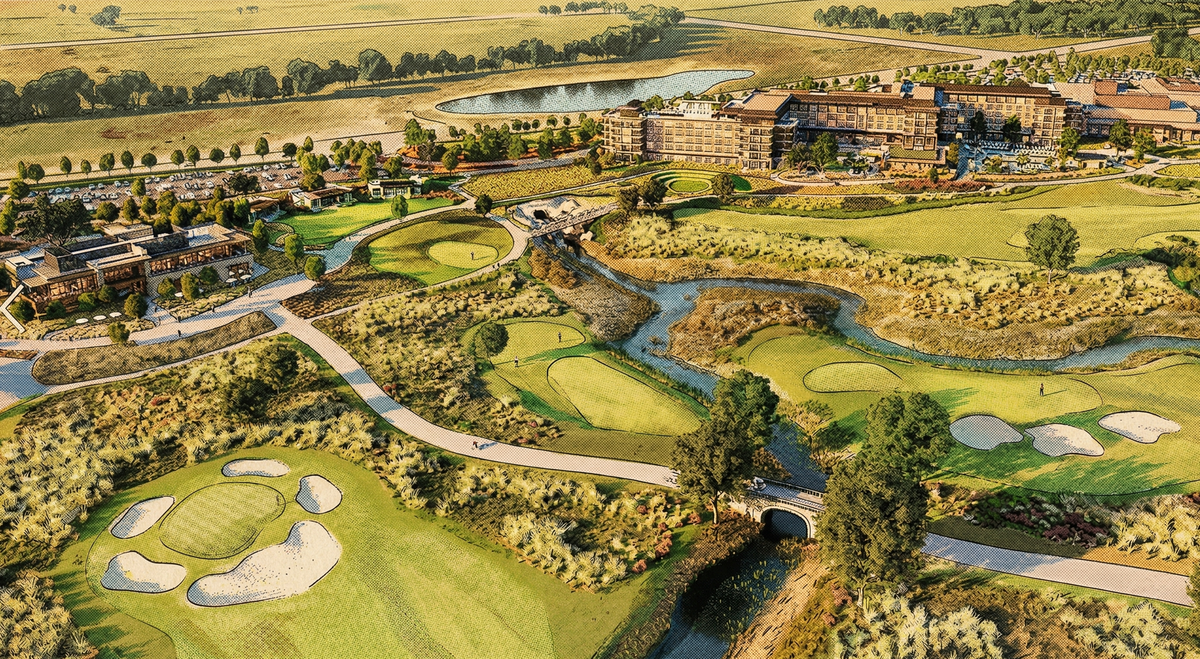
The PGA of America, the USGA, and the R&A are each investing tens of millions into permanent campuses that double as championship venues. Six majors in Frisco over twelve years. Five U.S. Opens in Pinehurst over twenty-three. A 150-year land lease. Combined projected economic impact: over $3 billion. Golf's governing bodies are no longer renting — they are building generational infrastructure designed to compound value for decades.
Golf is a $140B+ industry. Every week, Perfect Putt breaks down what's actually driving it. Welcome to the new members who've joined since our last send — you're now part of a growing community of 11,000+ golfers who follow the business of the game.
Read Time: 5 minutes
The Anchor Site Strategy
The PGA of America spent $33.5 million on a 106,000-square-foot headquarters in Frisco, Texas. The USGA invested $25 million in a six-acre campus in Pinehurst, North Carolina. The R&A recently purchased land to build a new facility in St Andrews.
Golf's three governing bodies are all deploying capital into the same strategic playbook: build a permanent home that is not just a headquarters but a championship venue — an anchor site that generates recurring economic value through major tournament hosting, year-round operations, and institutional permanence.
The combined projected economic impact of the Frisco and Pinehurst investments exceeds $3 billion over the next two decades. The strategy is straightforward. The execution — and the economics behind it — is worth examining.
PGA of America: Frisco
The PGA of America relocated from Palm Beach Gardens to Frisco in 2022. The move was driven by a combination of operational necessity — the organization had outgrown its Florida office — and a compelling financial incentive package from Frisco and the state of Texas.
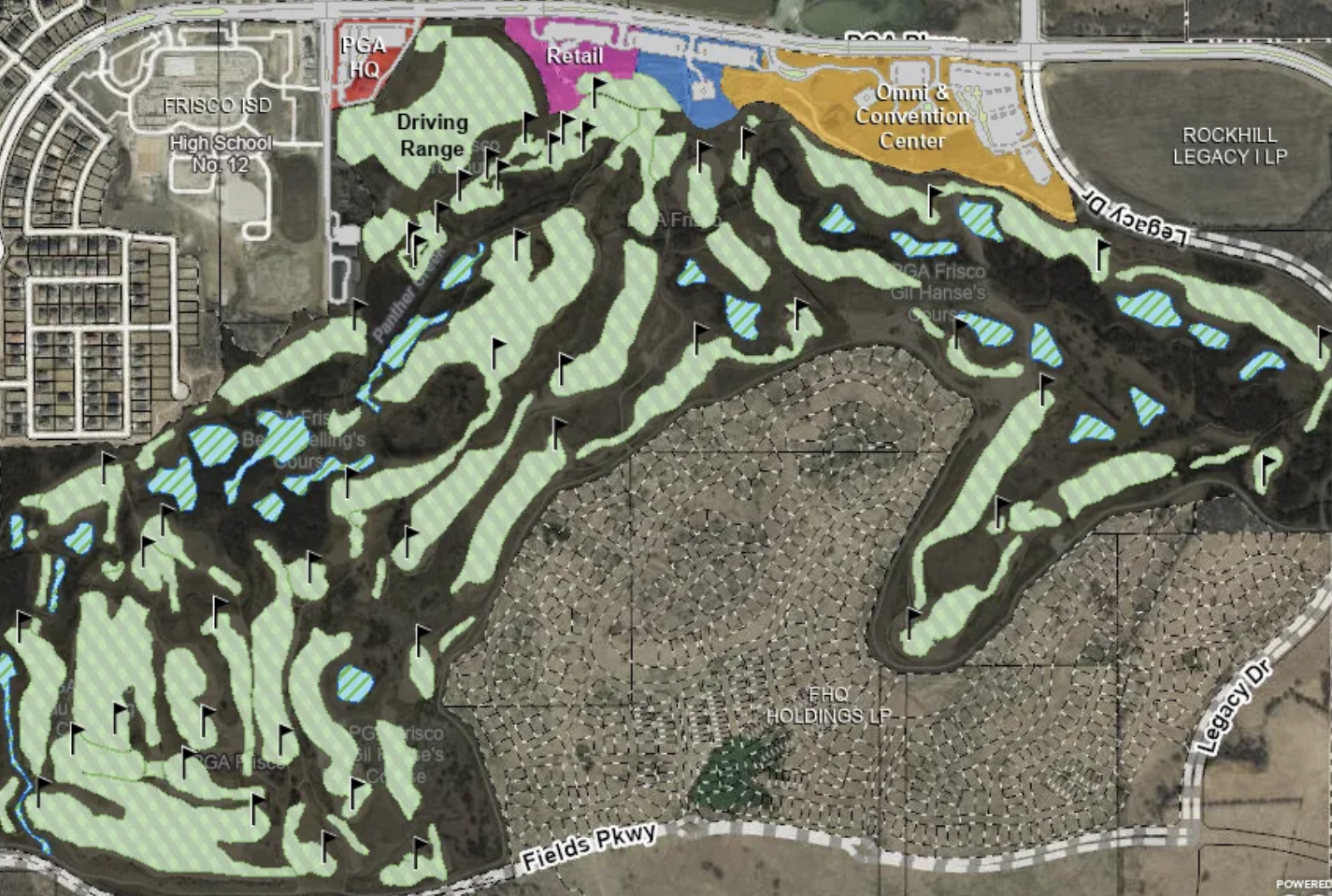
The result is a 600-acre campus with two world-class championship courses within a driver of the headquarters. For the first time in its history, the PGA of America owns the venue infrastructure to host its own major championships — something the organization never had in Palm Beach Gardens.
Six major championships are already scheduled at PGA Frisco over a twelve-year window: the 2023 Senior PGA Championship, the 2025 Women's PGA Championship, the 2027 PGA Championship, the 2029 Senior PGA Championship, the 2031 Women's PGA Championship, and the 2034 PGA Championship. The Ryder Cup will likely visit Frisco by 2037 or 2041, though nothing has been officially announced.
The last men's major championship held in Texas was the 1969 U.S. Open — a remarkable gap for a state with deep golf history and a massive population base.
Economic impact studies project the Frisco development will generate approximately $2.5 billion for the community over 20 years — roughly $125 million annually. That figure is aggressive but defensible when six major championships over twelve years are factored alongside year-round facility operations, tourism, hospitality, and the downstream spending that championship weeks generate.
USGA: Pinehurst
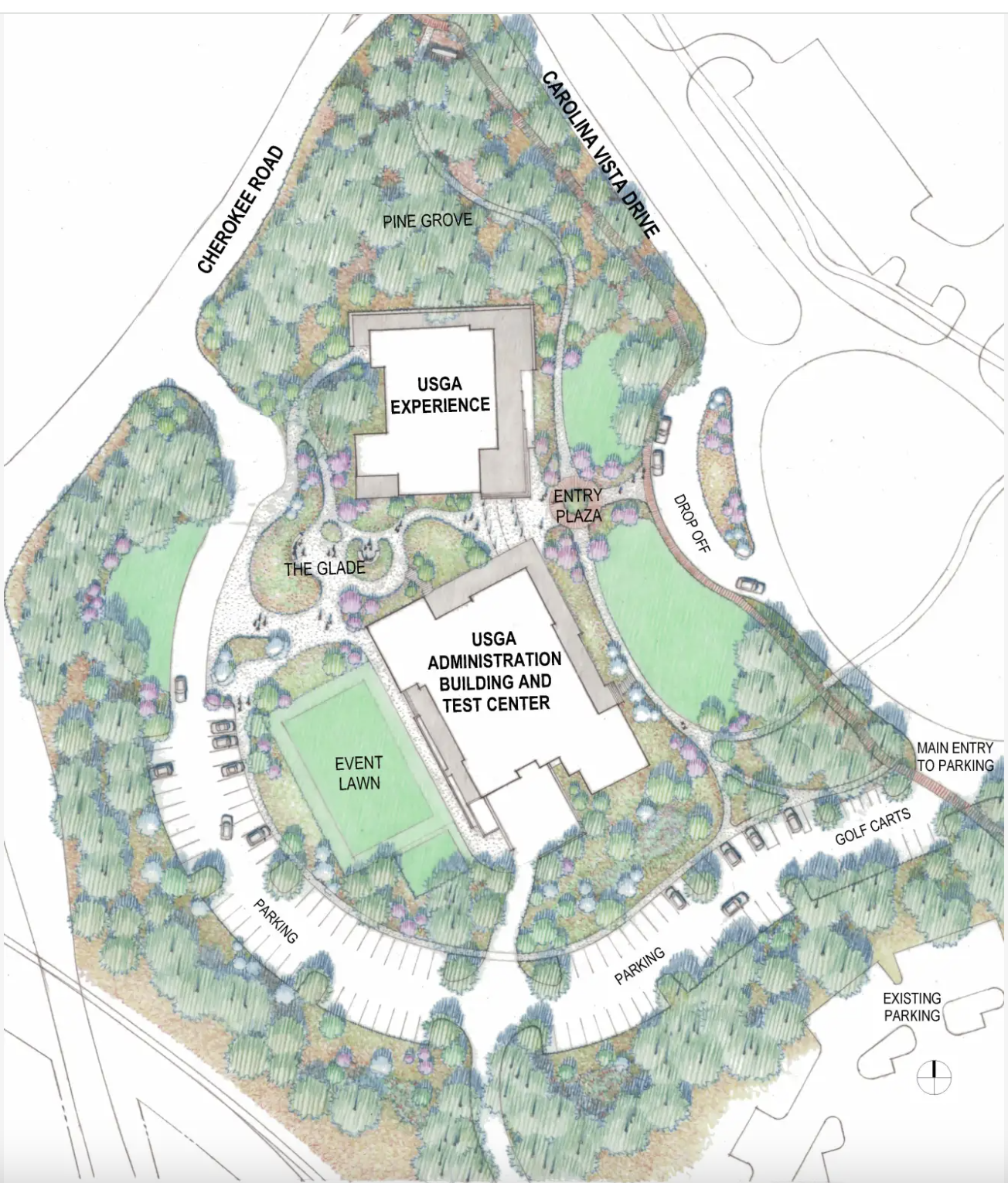
The USGA's approach is structurally different — it did not relocate its corporate headquarters from New Jersey. Instead, it built a complementary campus in Pinehurst: Golf House Pinehurst, a two-building, 46,000-square-foot facility that houses USGA administration, a test center, the USGA Experience museum, and the World Golf Hall of Fame. Approximately 70 full-time employees — roughly a third of the USGA's workforce — are based at the Pinehurst location.
The USGA signed a 150-year land lease with Pinehurst Resort and Country Club. That duration is not a typo. It reflects an institutional commitment measured in generations, not budget cycles.
The anchor site strategy is even more pronounced on the championship side. Pinehurst has been selected to host the U.S. Open five times over the next 23 years — 2024, 2029, 2035, 2041, and 2047 — plus the U.S. Women's Open in 2029. No other venue on the U.S. Open rota comes close to that frequency. Oakmont and Pebble Beach each have four future U.S. Opens scheduled.
The USGA estimates annual economic impact from its Pinehurst operations at approximately $18 million. The museum is projected to attract 24,000 visitors annually. The research and innovation center is expected to create 190 new jobs. The combined economic impact of the future U.S. Men's and Women's Opens at Pinehurst is projected at $585 million. Total expected economic activity for North Carolina over the next decade: approximately $800 million, with long-term impact studies projecting roughly $2 billion for the state.
The Institutional Logic
The anchor site model serves multiple strategic objectives simultaneously.
Championship control. By owning or long-leasing the venue infrastructure, governing bodies reduce their dependence on third-party host courses for their most commercially valuable events. The PGA of America no longer needs to negotiate venue terms for every championship — it controls the asset. The USGA has locked in its premier venue for 150 years.
Economic concentration. Recurring championships at a single site create compounding infrastructure investment — hotels, restaurants, transportation, hospitality — that improves the fan experience and the commercial yield of each subsequent event. The first championship at a new venue is expensive to produce. The sixth is significantly more efficient.
Community partnership. Both investments were structured with significant public and private sector participation. Frisco provided financial incentives to attract the PGA of America. Pinehurst is benefiting from USGA investment in workforce development — including a $1 million commitment to Sandhills Community College to create the Greenkeeper Apprentice Program, offering tuition-free education and paid on-the-job training at partner courses.
Talent and operations. A permanent campus with championship-caliber facilities attracts and retains institutional talent in ways that a standalone office building cannot. The Pinehurst test center, the Frisco courses, and the R&A's planned St Andrews expansion all serve dual purposes — competitive hosting and year-round organizational operations.
The Broader Pattern
The three investments — Frisco, Pinehurst, St Andrews — represent a coordinated structural shift in how golf's governing bodies capitalize their operations. The era of renting championship venues and operating from disconnected headquarters is ending. The replacement model: purpose-built campuses that generate recurring revenue through championship hosting, tourism, and institutional operations, funded by a combination of organizational capital, public incentives, and long-term venue agreements.
The economic projections are large — $2.5 billion in Frisco, $2 billion in North Carolina — but they are built on a defensible foundation of scheduled major championships, year-round facility operations, and the multiplier effects that concentrated golf tourism produces over decades.
The Takeaway
Golf's governing bodies are making generational infrastructure bets. The PGA of America, the USGA, and the R&A are each investing tens of millions into anchor sites that consolidate headquarters, championship hosting, research, and community engagement into single campuses designed to compound value over decades.
The strategy reflects a mature institutional recognition: golf's most commercially valuable assets are its major championships, and the organizations that control both the events and the venues are positioned to capture disproportionate economic value from those assets over time. The alternative — rotating championships through third-party venues with no permanent institutional footprint — leaves value on the table that the anchor model is designed to capture.
Six majors in Frisco over twelve years. Five U.S. Opens in Pinehurst over twenty-three. A 150-year lease. These are not short-term investments. They are bets on the permanent relevance of the sport — and on the institutions that govern it.
The best way to support Perfect Putt is to subscribe and share with a friend.