
Patient Capital Wins the Renovation Cycle
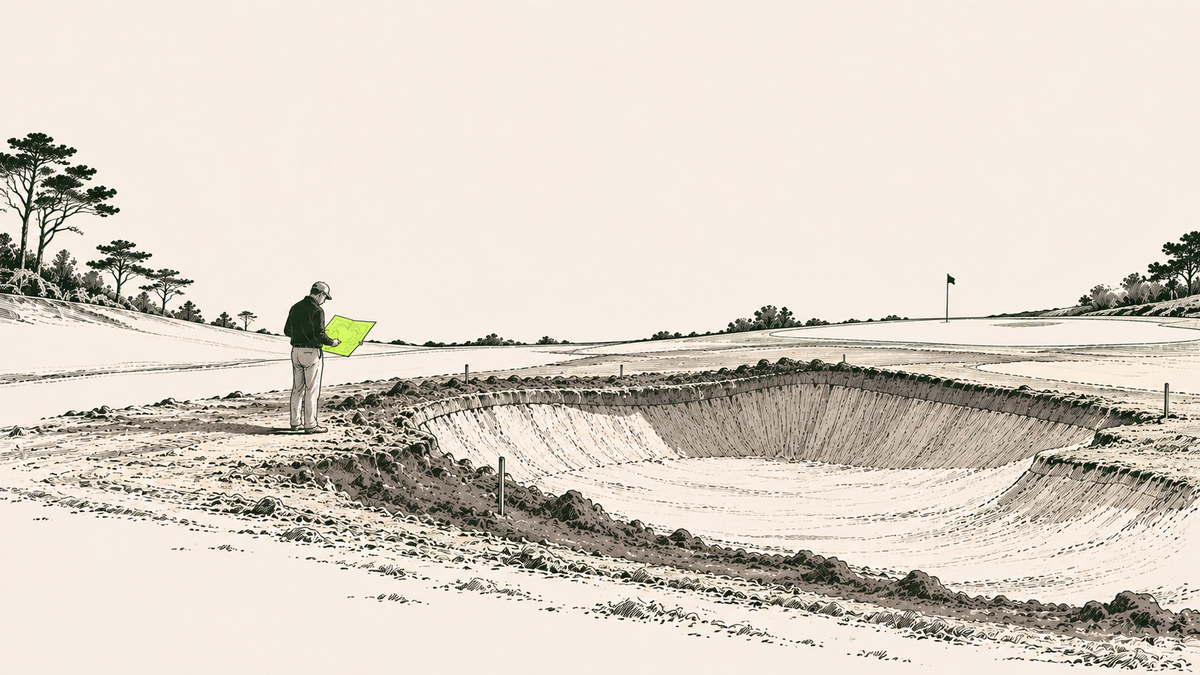
American golf is in a construction boom that adds almost no new golf. Clubs are rebuilding aging infrastructure, much of it from the 1990s, and top-tier remodels that cost $10 million to $12 million before 2020 now run $20 million to $30 million.
The return on that spending does arrive, but it arrives last and slowly. That makes patient capital the scarcest input in the cycle, and it is why clubs that cannot fund their own rebuilds are becoming deals.
Welcome to Perfect Putt, a newsletter covering the business and economics of the golf industry. If this was forwarded to you, subscribe to join 12,000+ readers who follow how capital flows through golf.
Read Time: 8 Minutes
The Construction Boom Without New Courses
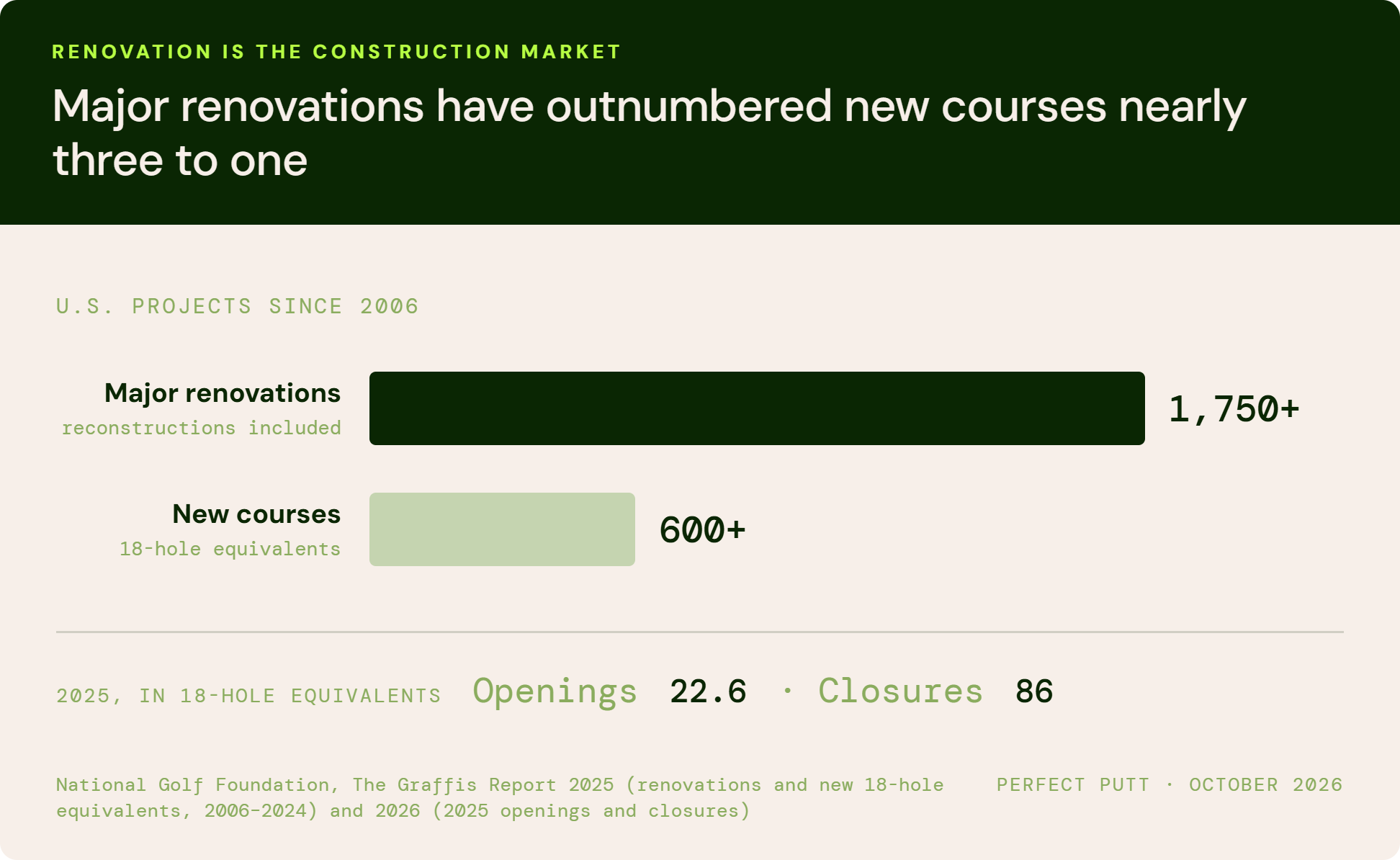
Since 2006, the National Golf Foundation has counted about 1,750 reconstructions and major renovations against just over 600 new 18-hole equivalents, while total supply contracted by about 13 percent. NGF tallied 22.6 18-hole equivalents of openings in 2025 against 86 closures, and course supply has been essentially flat since 2021. In 2024, 57 percent of private facilities and 47 percent of public ones made significant discretionary capital investments, about $3.1 billion in total, excluding mandatory replacements such as irrigation.
Renovation has become golf’s construction market, and it has a defining property: it adds no capacity. A rebuilt course serves roughly the same members and rounds as before. Every dollar must be recovered from the same customer base, through higher pricing, longer tenure or greater utilization.
A new course is underwritten against demand it expects to create. A renovation can only monetize demand a club already has. That leaves two variables at the center of the economics: the size of the bill and the patience of the capital funding it.
Today's Sponsor

This edition is presented by The Club, Old Tom Capital’s private investment community for golfers who invest seriously. Hundreds of vetted members: operators, founders, and accredited investors who know the game from the inside.
Old Tom Capital reviewed 600 opportunities last year and brought only a select few to members. Recent deal flow has included proprietary access to TGL (TMRW Sports), Grass League, Birdie Houses, TerraRad, and TRUE Linkswear.
Membership is $500 a year and carries no obligation to invest. The team brings the deals. Members decide where to commit.
Paying Luxury Prices for Plumbing
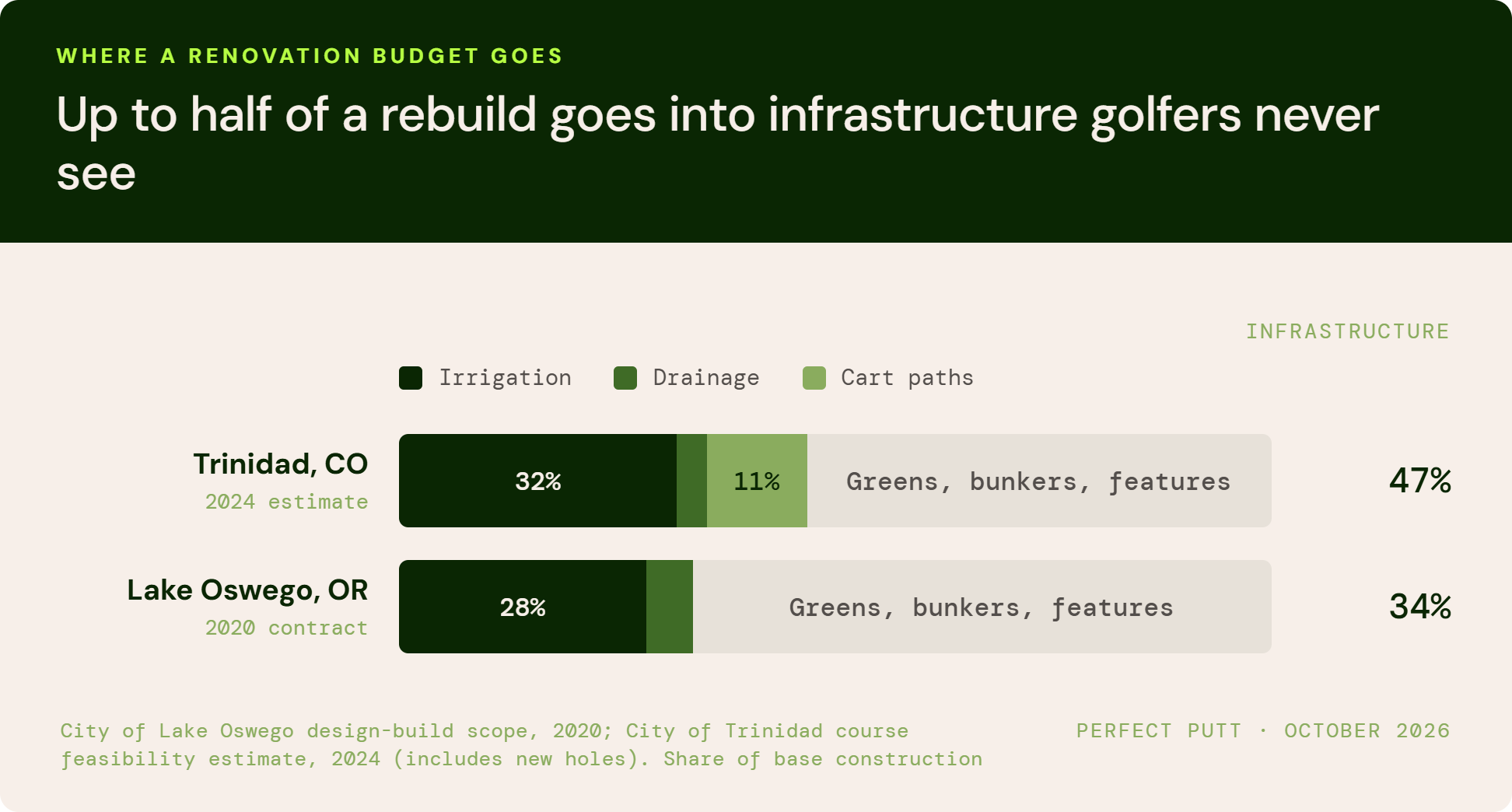
Most of what a renovation buys is invisible. In a 2020 municipal design-build contract in Lake Oswego, Oregon, irrigation accounted for 28 percent of base construction. In a 2024 estimate for a rebuilt and expanded course in Trinidad, Colorado, irrigation was about 32 percent of base construction, and with drainage and concrete cart paths, infrastructure approached half. At one major championship venue, the director of grounds told Golf Course Industry that three-quarters of the club’s restoration spending went to “things members don’t even see.
Age explains much of that spending. About 2,350 18-hole equivalents opened between 1995 and 2001, by NGF’s annual counts, and the American Society of Golf Course Architects’ life-cycle guidance puts the useful life of an irrigation system at 10 to 30 years. Systems installed then are now 25 to 31 years old. NGF’s figures imply the industry spent about $240 million a year on irrigation between 2018 and 2022, enough for roughly 50 to 100 complete systems annually. At that pace, much of the boom-era stock is likely operating past its design life. Replacement is close to mandatory, and it produces nothing a member can see.
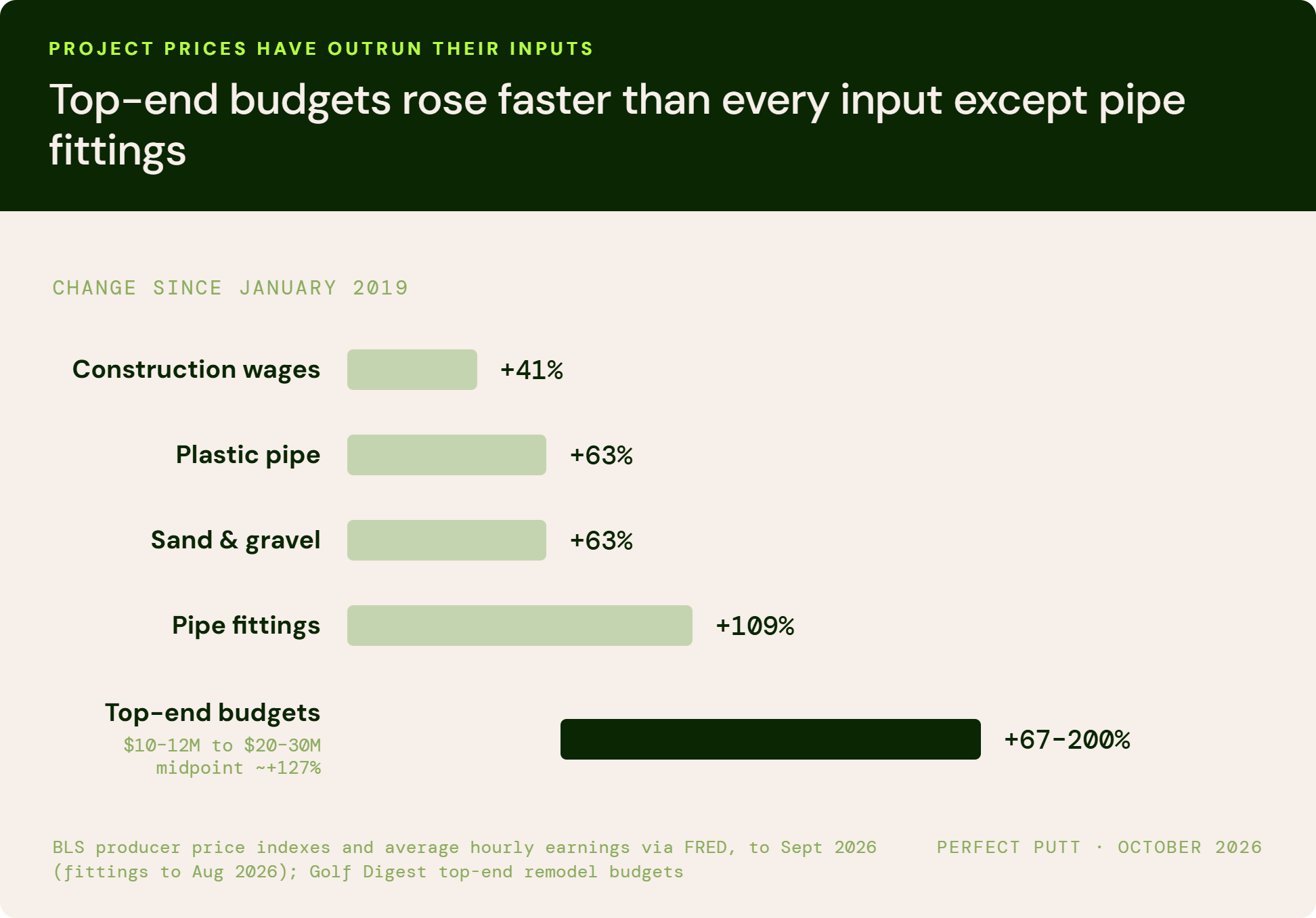
The cost of the work has outrun its inputs. Since January 2019, federal producer price indexes show plastic pipe up 63 percent, pipe fittings up 109 percent and construction sand and gravel up 63 percent, while construction wages rose 41 percent. Top-end project budgets have doubled or tripled over a similar period. Larger specifications, from denser irrigation to bunker liners, explain part of the gap. Constrained builder capacity explains the rest. An architect told Golf Inc. in 2025 that most qualified contractors were booked through at least 2027, and municipal bid records show many specialty projects drawing one to five bidders.
A Bill Funded on Credit
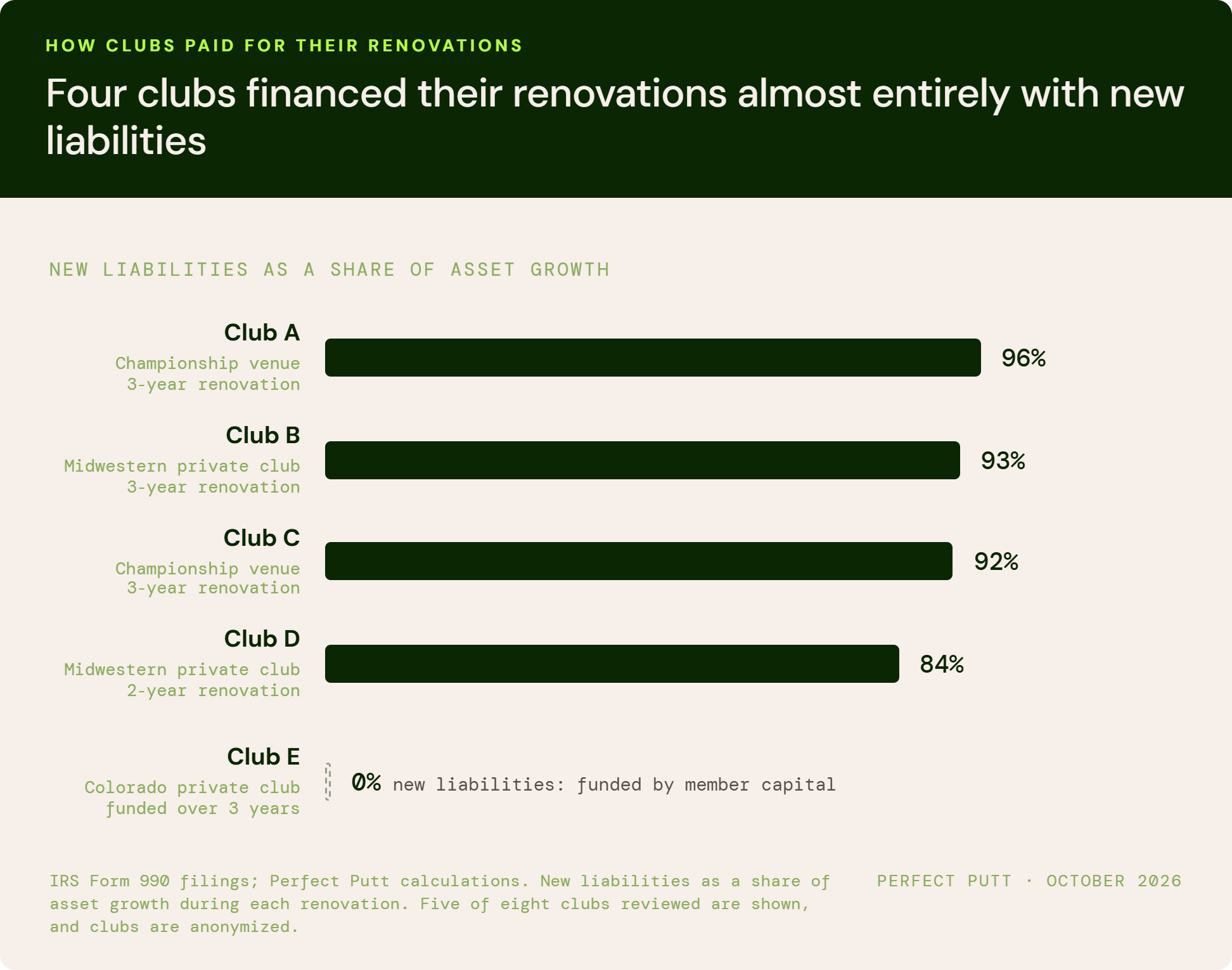
Because the return arrives slowly, the financing decides who bears the wait. At member-owned clubs, that is mostly the members. Most file IRS Form 990 returns as tax-exempt social clubs. Among eight clubs whose filings span a recent renovation, four, including two major championship venues, show new liabilities equal to 84 to 96 percent of the growth in assets during each club’s renovation. One Colorado club was the lone exception, funding an $8 million course rebuild with about $11.9 million of initiation fees and capital contributions over three years and no added debt.
Debt spreads the bill over time, which works only if members stay. The two championship venues reduced their liabilities by about $9 million over three years and by $4.7 million over four after their restorations. A Midwestern club in the sample shows what happens when members leave instead. After it announced a $6.5 million restoration funded partly by a special assessment, membership fell from about 675 to roughly 425 before construction began, according to local reporting, and program revenue in its filings dropped 29.5 percent in 2023, leaving fewer members to carry a larger balance sheet.
Governance makes these bills harder to approve as they grow. In the 2025 Club Board Perspectives Study, conducted with the National Club Association, 71 percent of respondents said a formal member vote is required to advance capital projects, and nearly 60 percent said their club had no capital reserve or shared one with ongoing maintenance. Approval margins narrow as projects get larger: one Great Lakes club’s $16 million plan passed with just over 57 percent of votes in 2024. Overruns of 22 to 77 percent appear across projects since 2017, in markets from California to the Southeast. One club in that group suspended refund payments to departed members while carrying $11.7 million of debt.
The Return Comes Last
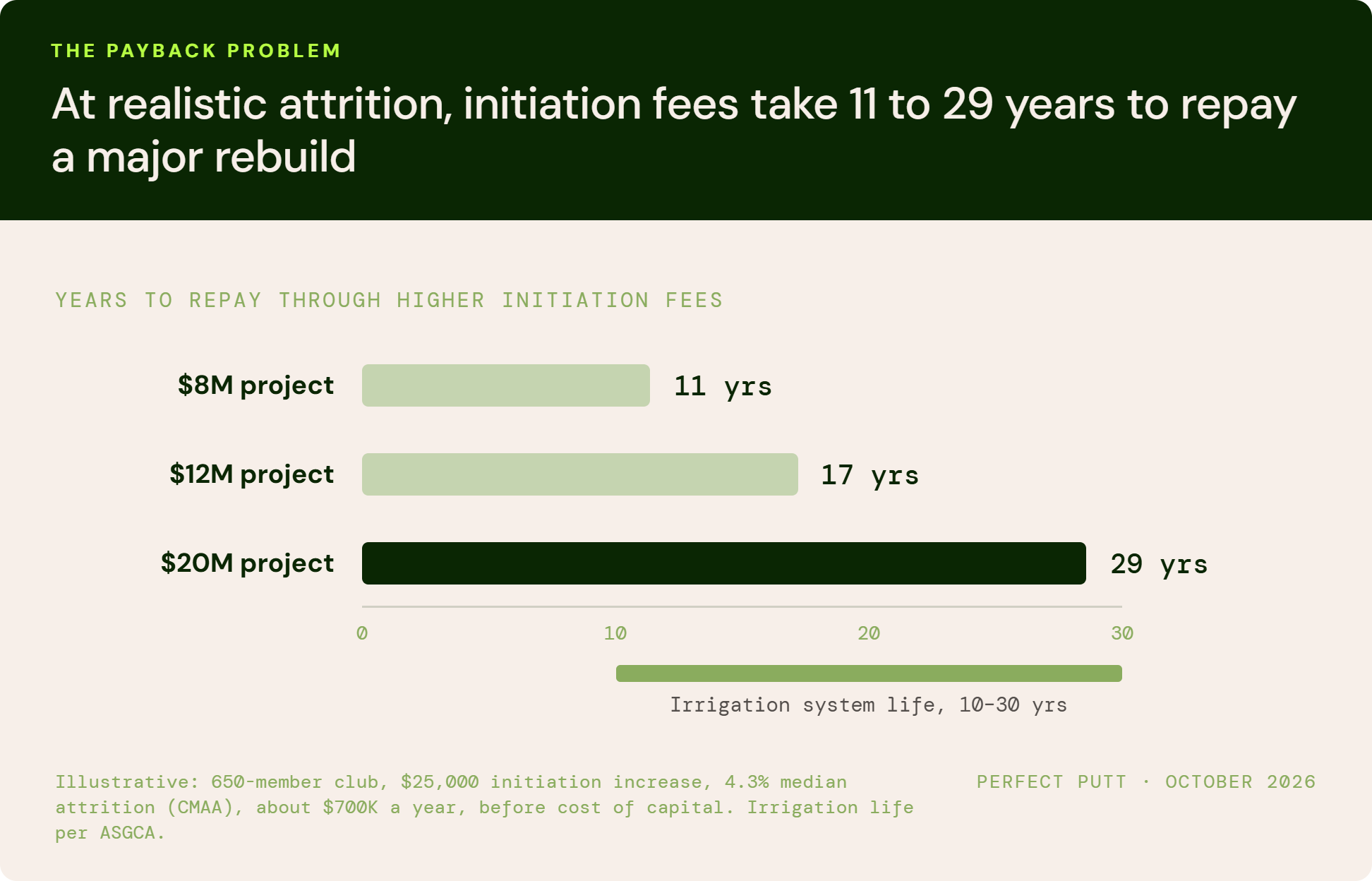
Each source of renovation return arrives on a different clock. Initiation fees, the most visible pricing lever, are the slowest. At the median member attrition of about 4.3 percent reported for golf and country clubs by the Club Management Association of America, a 650-member club that raises its initiation fee by $25,000 adds about 28 new members a year and collects roughly $700,000 more. That implies a payback of 11 to 29 years on an $8 million to $20 million project, before any cost of capital. Filling empty capacity is far faster. During its $7.8 million renovation in 2021, one Southern California club grew from 455 to 528 members and re-forecast its year about $3 million above budget on enrollment fees and dues, according to Club + Resort Business. That speed requires unsold memberships and buyers for them.
The most durable return runs through dues. A Club Benchmarking regression across more than 1,200 clubs, published with CMAA in April 2026, found that differences in gross assets account for 73 percent of the variation in operating dues revenue. The relationship is cross-sectional, not proof of causation, but it matches how clubs recover capital: monthly, over years. Capital dues average about 10 percent of operating dues, and clubs planned to raise them about 12.5 percent, according to GGA Partners’ Club Leaders’ Perspective survey with CMAA, summarized in 2025.
Recent returns also rode an unusual market. Nearly every post-renovation period in the filings above overlaps the 2021 to 2023 surge, when the share of clubs with waitlists roughly doubled to about half, according to CMAA. In the GGA Partners and CMAA survey reported in April 2025, the share of clubs with growing waitlists fell 21 percent, and most clubs planned initiation increases below 5 percent. The next $20 million projects will depend on the slower clocks. Where pricing is set publicly, the sequence stalls at volume. April-to-August revenue at Denver’s rebuilt City Park Golf Course rose about 63 percent between 2017 and 2021, BizWest reported, yet the city’s golf system cost more than twice as much to run in 2024 as in 2018 and required a 2025 fee increase to avoid a deficit, according to Denverite.
Scarcity Without Staying Power
While clubs wait for their return, suppliers are paid as the work is done. Builders currently hold the clearest pricing leverage in the cycle. Qualification screens in municipal bids, such as certified-builder status and a record of complete irrigation installations, narrow the field to a few dozen firms, and one architect told Golf Inc. that nine in ten of his projects are built in two short windows each fall and spring. That leverage is inherently cyclical. When Killeen, Texas, rebid a bunker project in 2025, five bidders responded and the low bid came in about 26 percent below the prior year’s. Consolidation to date has come from builders acquiring irrigation installers, including one established builder’s 2024 purchase of a New England irrigation and drainage firm with about $10 million in revenue. No financial-sponsor platform of course builders has yet surfaced in public deal records.
The suppliers with more durable economics are those positioned to earn from the wait itself, by financing it or by owning an input every rebuild must buy. One of the largest irrigation manufacturers offers financing on systems for up to 10 years at rates starting around 250 basis points over Treasuries, positioned as an alternative to member assessments, and sells through exclusive territorial distributors, which continue supplying courses with seed, fertilizer and bunker liners long after the builder leaves. Turfgrass breeders collect license fees and royalties from growers on protected varieties, so a course that re-grasses with one pays into that stream.rm or a network brand, would capture the cycle's most dependable revenue.
Capital Implications
Clubs that cannot carry the wait are increasingly turning to outside capital, from owners whose advantage is a longer horizon than a member vote. The largest private-club owners describe retiring club debt as standard practice when they acquire a club. Early gains often come from making a club easier to join before raising its price. When one operator recapitalized a member-owned club in the Mid-Atlantic at the end of 2016, it paid off all club debt and lowered annual dues by 10 to 15 percent after an overwhelming member vote, Golfdom reported. In one Southeastern city, a member-owned club agreed in December 2025 to buy its municipally owned course on condition that it remain an 18-hole golf course, according to local reporting. After members were told by club leadership that higher fees or a sale would be needed to fund renovations, they voted 167 to 9 in March 2026 to transfer control to an outside investor group planning a full course restoration.
Private capital has priced the opportunity at scale. Sales of private-club platforms over the past year have been reported at values from more than $1.3 billion to about $3 billion, according to Bloomberg and Reuters. With typical golf courses trading at six to eight times EBITDA, according to CBRE, returns depend less on multiple expansion than on entering underfunded clubs at the right basis and executing the renovation well.
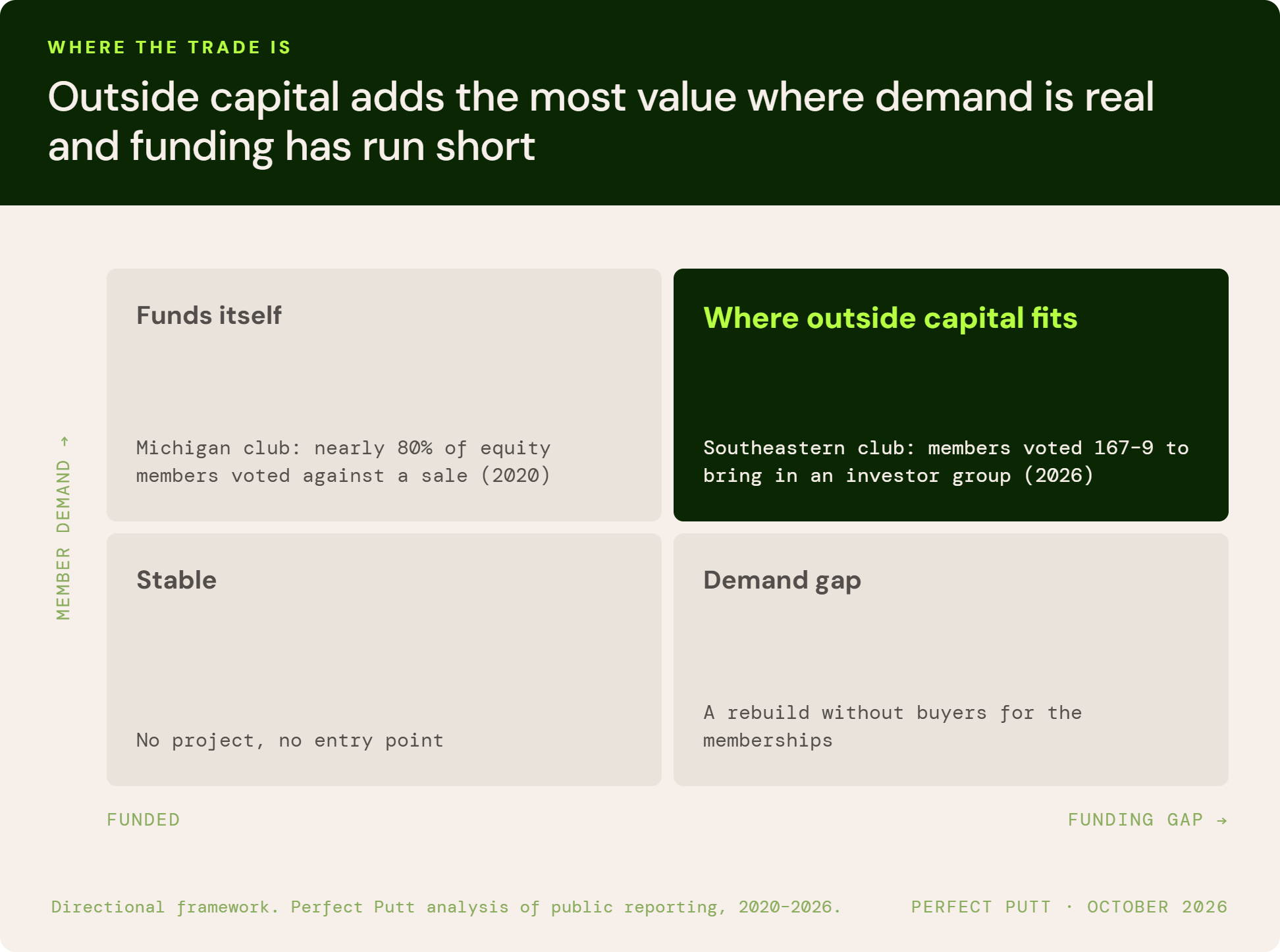
For investors, the opportunity is concentrated. Clubs with waitlists can usually fund themselves, and financially healthy memberships often decline outside offers. In 2020, nearly 80 percent of one Michigan club’s equity members voted against a sale to a national homebuilder.
The strongest fits are clubs in growing markets with durable demand, deferred infrastructure and a funding gap, often one that opens mid-project after an overrun. A second opportunity is long-dated credit for whole-course projects that no single vendor will finance, structured so debt service is amortized into capital dues rather than landing on members as a lump-sum assessment. Builders offer exposure to a real but cyclical scarcity premium. Public courses, funded through philanthropy, utilities and tax-exempt bonds, offer limited room for private returns.
The signals worth tracking are narrow member votes, cost overruns, refund suspensions and widening bid fields. Each is an early indication of which clubs will fund the next cycle themselves and which will seek a capital partner.
The best way to support Perfect Putt is to share it with a friend.